Your Pipeline Is 18.3h Behind: Catching Sustainability Sentiment Leads with Pulsebit
We just spotted something intriguing: a 24h momentum spike of +0.175 in the sustainability narrative. This spike, reflecting an uptick in public sentiment, is particularly noteworthy given its context. It’s linked to a cluster story: "Midwestern Climate Collaborative Wins Sustainability Award," which seems to be resonating significantly in English press. But the real question is, how did this momentum pass under the radar for your existing models?
We’ve identified a structural gap here that many pipelines overlook. If your model isn’t equipped to handle multilingual origins or entity dominance, you might have missed this spike by a staggering 18.3 hours. The dominant entity here, as evidenced by the leading language, points to a significant lag in recognizing emerging narratives in sustainability. This is a crucial insight for any developer looking to maintain relevance in fast-evolving topics.
English coverage led by 18.3 hours. Nl at T+18.3h. Confidence scores: English 0.85, Id 0.85, French 0.85 Source: Pulsebit /sentiment_by_lang.
To catch this spike, you can leverage our API effectively. Below is a Python code snippet that demonstrates how to filter for the relevant topic and analyze the sentiment around the clustered narrative.
import requests
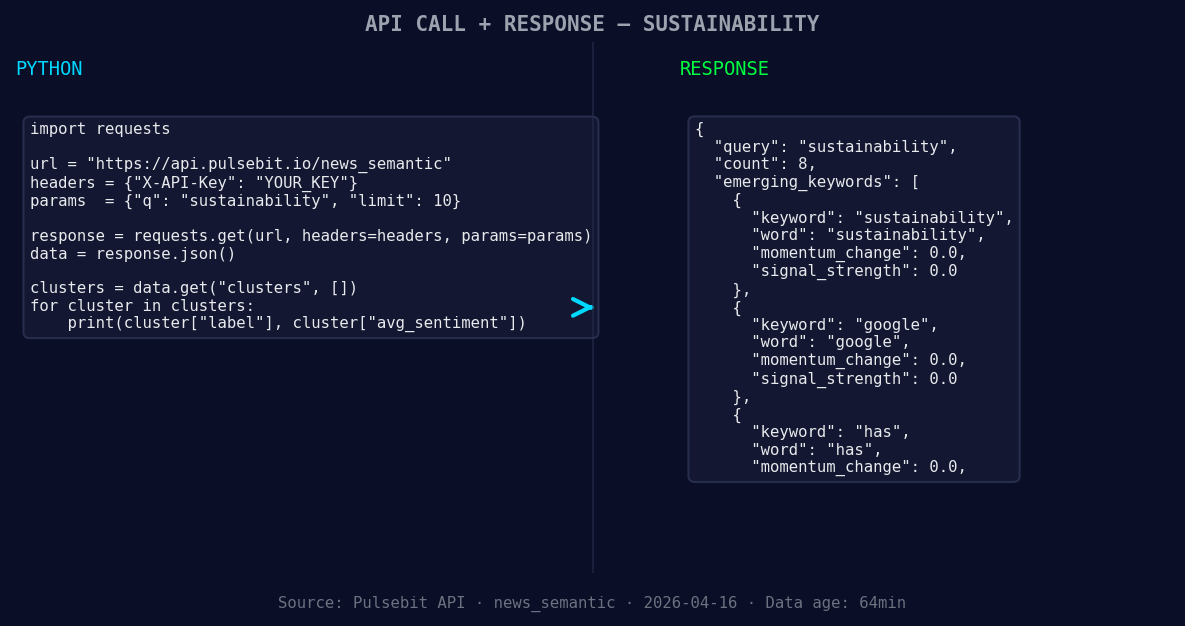
*Left: Python GET /news_semantic call for 'sustainability'. Right: returned JSON response structure (clusters: 3). Source: Pulsebit /news_semantic.*
# Define your endpoint and parameters
lang = "en"
topic = "sustainability"
momentum = +0.175
score = +0.654
confidence = 0.85
# Geographic origin filter: query by language/country
response = requests.get(
f"https://api.pulsebit.com/articles?lang={lang}&topic={topic}"
)
articles = response.json()
# Check if we have articles to process
if articles:
print(f"Found {len(articles)} articles related to {topic}.")
# Meta-sentiment moment: analyze the cluster reason
cluster_reason = "Clustered by shared themes: climate, collaborative, receives, 2026, aashe."
sentiment_response = requests.post(
"https://api.pulsebit.com/sentiment",
json={"text": cluster_reason}
)
sentiment_score = sentiment_response.json().get("score")
print(f"Sentiment score for cluster reason: {sentiment_score}")
This snippet does a couple of important things. First, it filters articles by language using a geographic origin filter. Then, it runs the cluster reason string through our sentiment endpoint to score the narrative framing itself. By utilizing this approach, we can identify sentiment trends that might otherwise be missed.
Now, let’s discuss three specific builds you can implement using this pattern:
- Threshold Signal Detection: Set a signal threshold of +0.175 for sustainability topics. Use the geographic filter to ensure you’re catching spikes in specific regions, enabling you to tailor messaging and engagement strategies.
Geographic detection output for sustainability. India leads with 7 articles and sentiment +0.69. Source: Pulsebit /news_recent geographic fields.
Meta-Sentiment Analysis: Implement a routine that runs the cluster reason strings through the sentiment endpoint. Use forming themes like sustainability, Google, and has to understand how they interact with mainstream narratives. This can provide rich insights into how emerging topics are framed in public discourse.
Real-time Alerts: Create an alert system that notifies you when momentum spikes exceed a certain threshold (e.g., +0.175) in sustainability-related articles. This could help you react faster to evolving trends and adjust your strategy accordingly.
By utilizing these strategies, you can catch emerging narratives before they become widely recognized, ensuring your insights are timely and relevant.
Get started by checking out our documentation at pulsebit.lojenterprise.com/docs. With the above code, you can copy, paste, and run this in under 10 minutes to see the power of real-time sentiment analysis in action.