Your Pipeline Is 22.3h Behind: Catching Inflation Sentiment Leads with Pulsebit
We recently uncovered an intriguing anomaly: a 24h momentum spike of -0.825. This spike indicates a marked decline in sentiment regarding inflation, which has been a hot topic lately. However, what’s even more interesting is that the leading language driving this sentiment is English, with a 22.3-hour lead over Hindi. This delay in sentiment analysis could leave your pipeline lagging behind critical insights that could inform your investment strategies.
The problem is clear. If your model doesn’t account for multilingual origins or entity dominance, you might find yourself 22.3 hours late to the conversation. While your pipeline processes data, it may overlook valuable insights from English sources, especially when it comes to pressing topics like inflation. This means you could miss out on timely opportunities and fail to react appropriately to shifts in sentiment. That’s a significant gap in your analytics capabilities.
English coverage led by 22.3 hours. Hindi at T+22.3h. Confidence scores: English 0.85, French 0.85, Spanish 0.85 Source: Pulsebit /sentiment_by_lang.
Let’s dive into how we can catch this sentiment spike using our API. Here’s a Python snippet that filters for English language articles on inflation, checks sentiment, and scores the narrative surrounding the data.
import requests
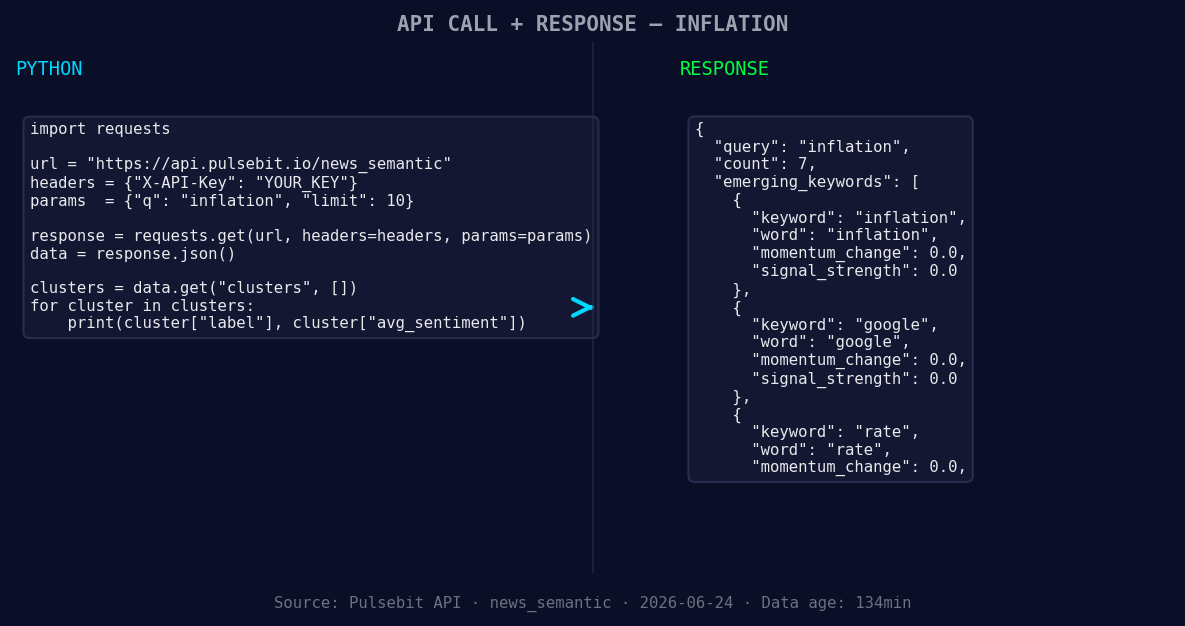
*Left: Python GET /news_semantic call for 'inflation'. Right: returned JSON response structure (clusters: 3). Source: Pulsebit /news_semantic.*
# Step 1: Geographic origin filter for English language
url = "https://api.pulsebit.com/articles"
params = {
"topic": "inflation",
"lang": "en",
"score": 0.088,
"confidence": 0.85,
"momentum": -0.825
}
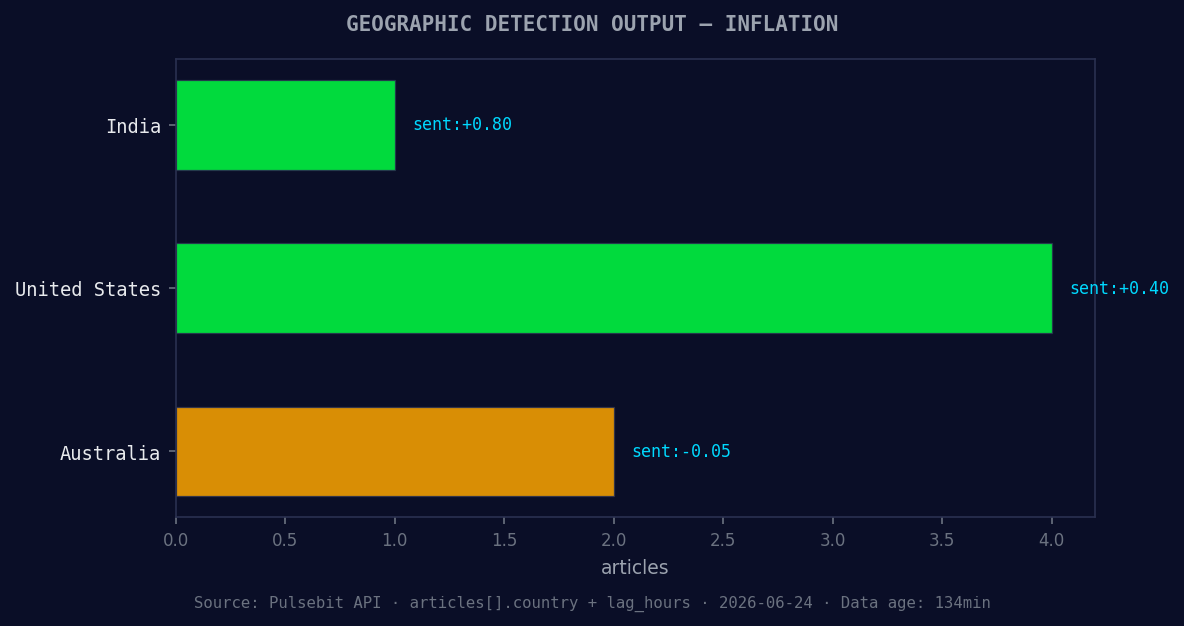
*Geographic detection output for inflation. India leads with 1 articles and sentiment +0.80. Source: Pulsebit /news_recent geographic fields.*
response = requests.get(url, params=params)
data = response.json()
# Step 2: Meta-sentiment moment for narrative framing
narrative = "Clustered by shared themes: top, firm's, investing, playbook, before."
sentiment_url = "https://api.pulsebit.com/sentiment"
sentiment_response = requests.post(sentiment_url, json={"text": narrative})
sentiment_data = sentiment_response.json()
print("Articles Data:", data)
print("Narrative Sentiment Score:", sentiment_data)
In this code, we first filter the articles by language (English) and topic (inflation). We leverage the momentum score and sentiment confidence to ensure we’re only looking at relevant data. Next, we take the narrative string generated by the API and send it through a sentiment check to score its framing. This dual approach allows us to capture the momentum and analyze the context that surrounds it.
Now that we’ve set up a solid pipeline, let’s consider three specific builds we can implement using this pattern:
Inflation Alert System: Set a threshold for the momentum score, say -0.5. When the API detects a spike below this threshold for English articles, trigger a notification to your team to investigate further. This will keep your investment strategies agile.
Narrative Framing Analysis: Use the meta-sentiment loop to continuously analyze the narratives surrounding inflation. Create an endpoint that checks for significant shifts in sentiment surrounding the themes “top,” “firm’s,” and “investing.” This can help you understand how narratives evolve and impact market sentiment.
Geographical Insights Dashboard: Build a dashboard that visualizes sentiment and momentum across different languages. Use the geo filter to compare the sentiment surrounding inflation in English versus Hindi. This can highlight discrepancies and ensure you’re not missing critical insights from any demographic.
By implementing these builds, you can significantly enhance your understanding of inflation sentiment and react proactively.
Ready to get started? Head over to pulsebit.lojenterprise.com/docs. You’ll be able to copy, paste, and run this in under 10 minutes, setting you on the path to catching those critical sentiment leads in real-time.